

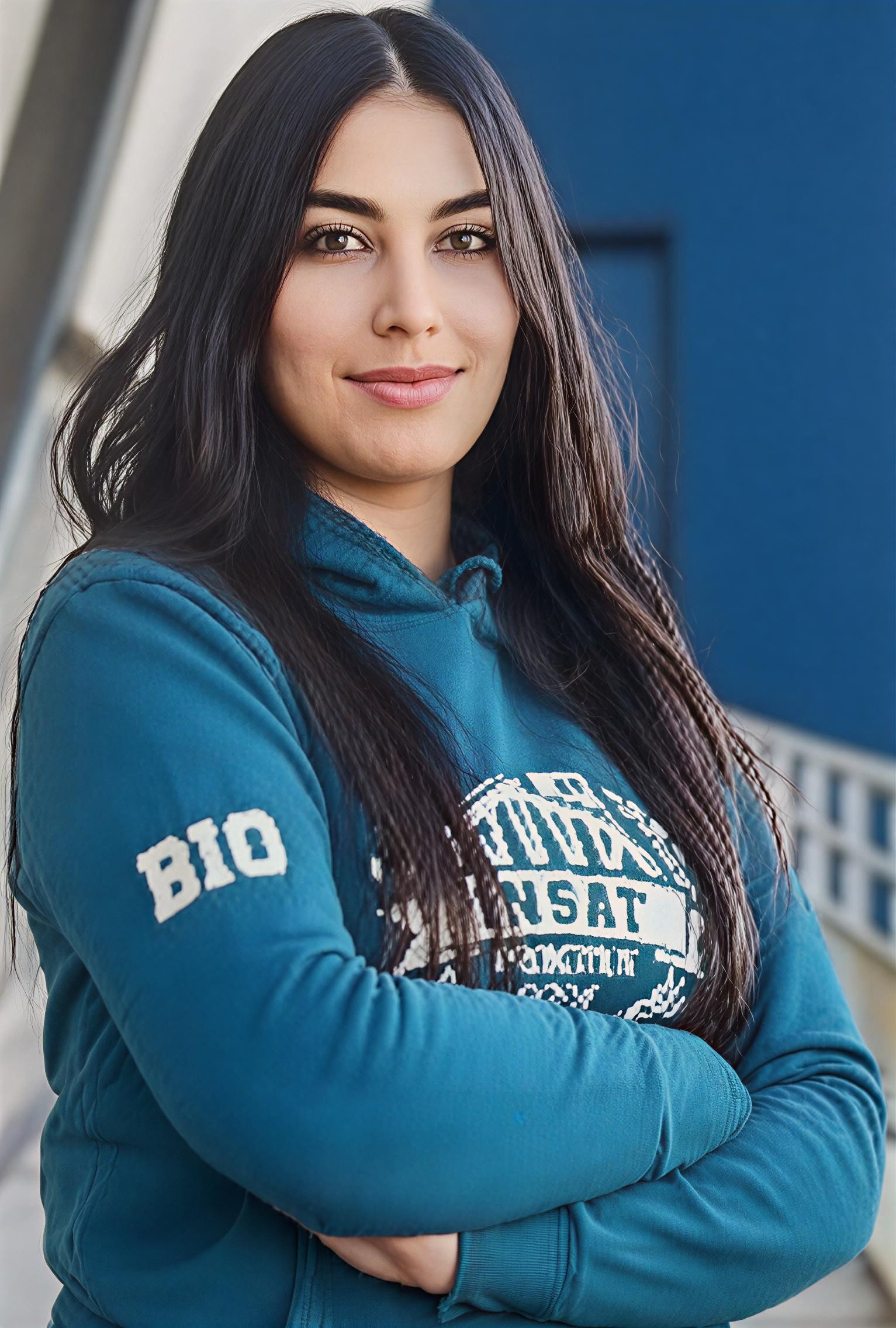
Mariem Alibi
Universita degli studi di Cagliri, Italy
Abstract Title: Innovative approaches in cosmetic research: Recovery of bioactive polyphenols from carob pulp through agro-industrial by-product valorization
Biography:
Mariem Alibi is a second-year PhD candidate in a cotutelle program between the University of Cagliari and the Institut National des Sciences Appliquées et de Technologie (INSAT), Tunisia. Her research focuses on the valorization agro-industrial by-products and their applications in cosmeceutical and nutraceutical formulations. She has developed expertise in cosmetic formulation and experimental evaluation of bioactive compounds, particularly in the development and characterization of protective formulations for skin and hair. Alongside her research activities, she contributes to academic training by teaching practical laboratory sessions in cosmetic formulation at INSAT and conducting workshops dedicated to formulation techniques and cosmetic innovation. Her work combines scientific research, practical experimentation, and knowledge transfer, aiming to promote sustainable and innovative approaches in the cosmetic and bioresource valorization fields.
Research Interest:
Statement of the Problem: Valorization of agro-industrial by-products represents an important opportunity for sustainable waste management and the development of high-value natural products. Seedless crushed carob (Ceratonia siliqua L.) pulp, a by-product of the carob powder industry, is often discarded despite its richness in bioactive compounds. Efficient extraction of these compounds could provide natural antioxidants for nutraceutical and cosmetic applications, transforming waste into valuable resources.
Methodology & Theoretical Orientation: Seedless crushed carob pulp was freeze-dried, ground, and subjected to four extraction methods: maceration, ultrasound-assisted extraction (UAE), maceration followed by UAE, and UAE followed by maceration. Three solvents were tested: distilled water, 70% (v/v) ethanol, and 96% (v/v) ethanol. To optimize UAE, sonication times of 10, 20, 30, and 40 minutes were evaluated, and total polyphenol content (TPC) was measured. Extracts were analyzed for extraction yield, total flavonoid content (TFC), antioxidant activity (DPPH, FRAP), and biocompatibility in cultured cells. Polyphenolic profiles were determined using UPLC-DAD, and molecular docking assessed interactions of major polyphenols with relevant biological targets.
Findings: Among the tested techniques, UAE was the most efficient. Solvent choice significantly influenced extraction efficiency: 70% ethanol and water provided the highest yields, while 96% ethanol was less effective. UAE with 70% ethanol for 30 minutes yielded the highest polyphenol content (10.64 mg GAE/g DM) and high flavonoid levels. These extracts also showed strong antioxidant activity (DPPH IC₅₀ = 4.86 µg/mL; FRAP up to 48.53 µmol/mL). UPLC-DAD identified vanillic acid, catechin, rutin, and quercetin as major compounds, and molecular docking confirmed their strong binding affinity to antioxidant-related targets. Biocompatibility assays indicated no cytotoxicity.
Conclusion & Significance: Seedless carob pulp represents a valuable source of natural antioxidants. Optimized UAE extraction enables its transformation into high-value ingredients for nutraceutical and cosmetic applications, supporting sustainable waste valorization and the circular bioeconomy.